
Complete Furniture Selection Guide for Indian Homes 2025 | Expert Tips & Buying Guide

Complete Furniture Selection Guide for Indian Homeowners 2025

Summary: Selecting the right furniture for your home is one of the most important decisions that impacts both functionality and aesthetics of your living space. In India's diverse climate and evolving lifestyle patterns, furniture selection requires careful consideration of multiple factors beyond just appearance. This comprehensive guide provides essential insights for homeowners to make informed furniture choices, with special emphasis on sofa selection.

Understanding Furniture Selection Fundamentals

Material Selection: The Foundation of Quality

Wood Materials remain the most popular choice for Indian homes, offering durability and traditional appeal. Teak and Sheesham emerge as premium hardwood options, particularly suitable for India's humid climate conditions. These woods demonstrate excellent resistance to moisture, termites, and temperature fluctuations common across Indian regions.

Mango wood provides a mid-range alternative with good strength and attractive grain patterns. For budget-conscious buyers, engineered wood offers functionality while maintaining cost-effectiveness, though it requires proper treatment for climate resistance.

Metal furniture, including steel and wrought iron options, delivers modern aesthetics with high durability. However, rust-proofing becomes essential in coastal and humid areas. Glass furniture adds contemporary elegance but demands higher maintenance and careful handling.
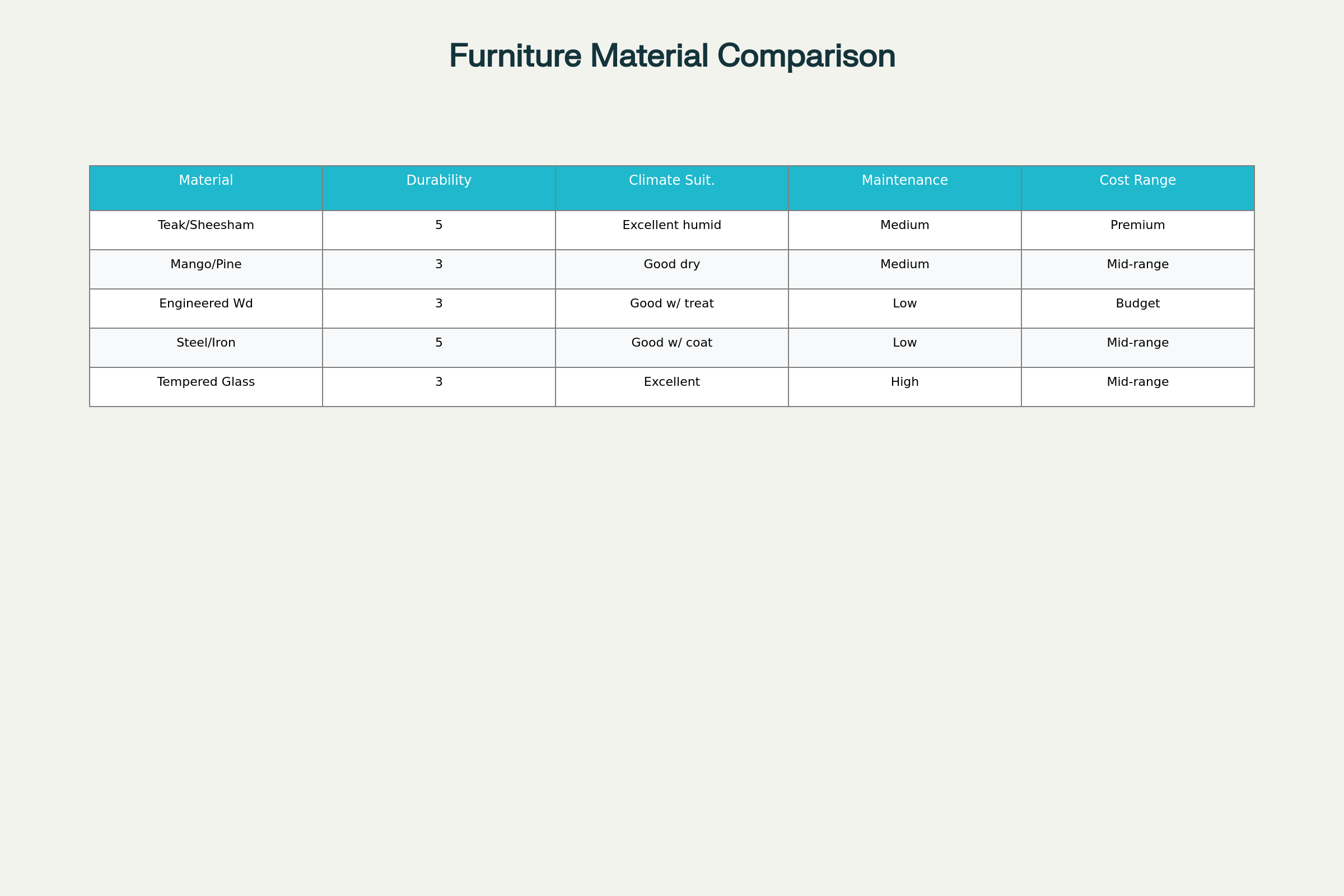
Furniture Material Comparison for Indian Homes

Furniture Material Comparison for Indian Homes - Durability, Climate Suitability, Maintenance and Cost Analysis

Color and Finish Considerations

Furniture finishes significantly impact both aesthetics and maintenance requirements. Natural finishes showcase wood's inherent beauty while remaining versatile for various decor styles. Honey finishes provide slight warmth and help match wood tones, making them ideal for regular-use furniture. Walnut finishes offer rich, darker tones perfect for spaces with abundant natural light.

India-Specific Tip: Darker finishes prove more practical as they better conceal dust accumulation - a common concern in most Indian cities. Light-colored finishes work well in smaller spaces to create an illusion of openness but require more frequent maintenance.

Climate Compatibility: Critical for Indian Conditions

Humidity and Temperature Resistance

India's diverse climate conditions demand furniture materials that withstand extreme temperature variations and humidity levels. Coastal regions experience high humidity requiring moisture-resistant materials and treatments. Northern plains face extreme temperature swings demanding furniture that won't crack or warp with seasonal changes.

  • Hardwoods like teak and oak naturally resist humidity better than softwoods
  • Metal furniture requires rust-resistant coatings
  • Fabric upholstery needs breathable materials to prevent mold and mildew growth

Monsoon Considerations

During monsoon seasons, furniture faces increased moisture exposure, dust, and humidity. Proper ventilation around furniture pieces prevents moisture buildup. Dehumidifiers help maintain optimal 40-60% humidity levels protecting wooden furniture from swelling and warping.

Key Point: Protective coatings including quality wood polish and sealants create moisture barriers while enhancing natural wood luster. Regular maintenance becomes particularly important during and after monsoon periods.

Sofa Selection: Special Focus for Indian Homes

Size and Seating Capacity Guidelines

Sofa selection requires careful consideration of room dimensions and family size. Standard sofa dimensions vary significantly:

  • 2-seater sofas: Width 48-60 inches, suitable for small apartments and 1-2 people
  • 3-seater sofas: Width 72-90 inches, ideal for standard families of 3-4 people
  • 5-seater configurations (3+1+1): Perfect for joint families and entertaining guests
  • L-shaped and sectional sofas: Best for larger spaces and maximum seating efficiency
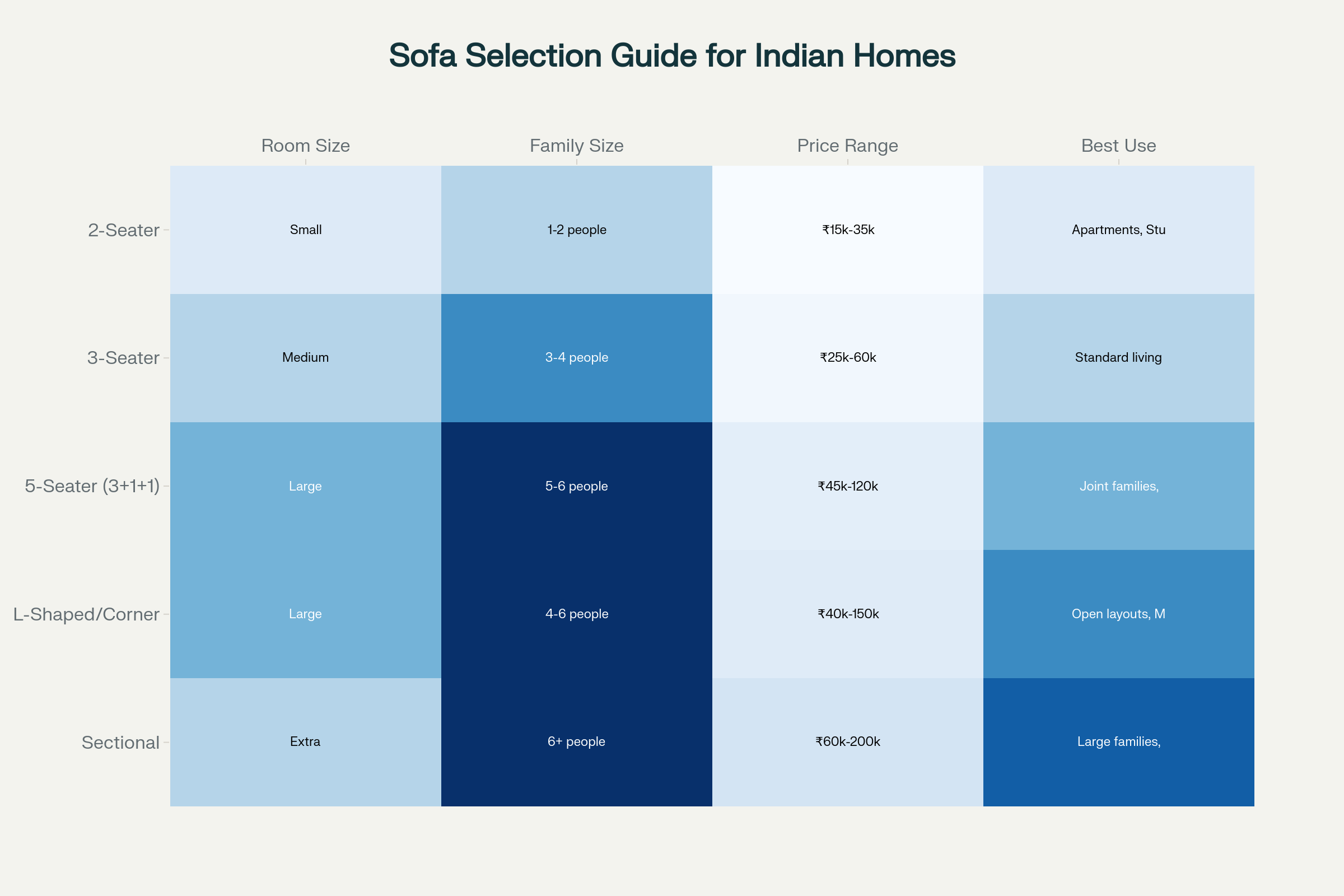
Indian Family Tip: The 3-seater sofa remains most popular in Indian homes, offering optimal balance between seating capacity and space utilization. For Indian families, deeper seats (30-40 inches) accommodate traditional sitting postures including cross-legged seating.
Sofa Selection Guide for Indian Homes

Sofa Selection Guide for Indian Homes - Size, Seating Capacity, Price Range and Best Use Cases

Fabric Selection for Indian Climate

Climate compatibility becomes paramount when selecting sofa upholstery for Indian conditions. Different regions require different fabric considerations:

Hot and Humid Regions (Mumbai, Chennai, Kolkata)

Cotton and linen fabrics provide excellent breathability and cooling properties. These natural fibers allow air circulation, preventing the sticky feeling common with synthetic materials during hot weather.

Dry and Air-Conditioned Environments

Leather sofas work well in controlled temperature settings, offering durability and easy maintenance. However, leather can feel uncomfortably warm and sticky in non-air-conditioned environments during summer months.

All-Climate Options

Microfiber and polyester blends offer versatility across different climate conditions while providing stain resistance and easy maintenance. These synthetic options prove particularly suitable for families with children and pets.
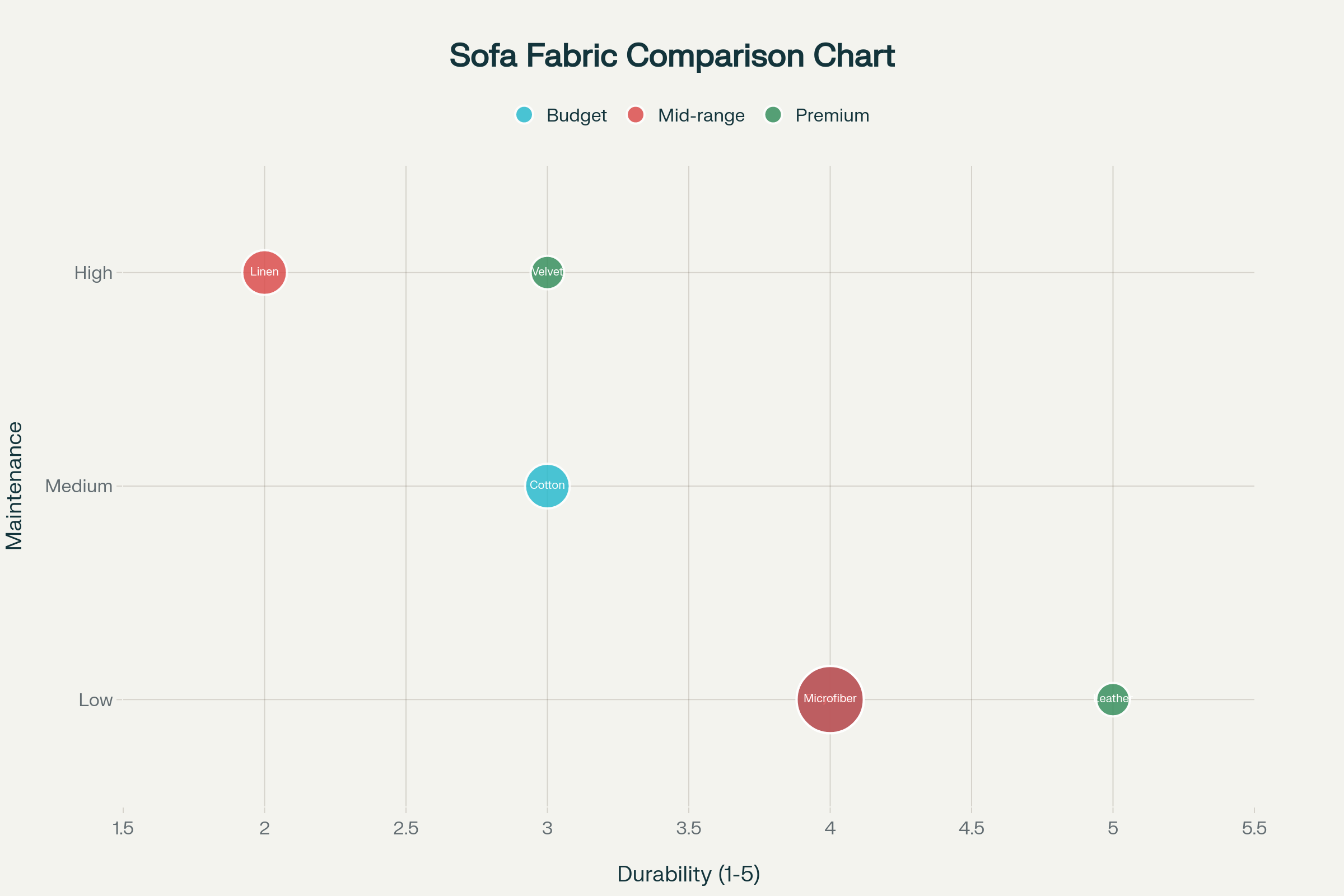
Sofa Fabric Comparison for Indian Climate

Sofa Fabric Comparison for Indian Climate - Material Properties, Maintenance and Suitability Analysis

Sofa Selection Checklist

Factor Recommendation Why Important
Frame Material Solid hardwood (Teak/Sheesham) Durability in Indian climate, humidity resistance
Upholstery Cotton/Microfiber for hot regions Breathability and comfort in Indian weather
Cushion Filling High-density foam Firm support for Indian sitting habits
Size 3-seater for standard families Optimal space utilization and seating
Maintenance Removable covers preferred Easy cleaning in dusty Indian conditions

Functionality and Space Efficiency

Multi-functional Furniture for Indian Homes

Multi-functional furniture has become essential for modern Indian homes, especially in urban areas where space constraints are common. Sofa-cum-beds, storage ottomans, dining tables with built-in storage, and modular furniture systems maximize utility while minimizing space consumption.

Market Insight: The global multifunctional furniture market, valued at $7.21 billion in 2023 and projected to reach $11.21 billion by 2030, reflects this growing demand. Indian households increasingly prefer furniture that adapts to multiple needs rather than single-purpose pieces.

Space-Saving Solutions

  • Sofa-cum-beds: Perfect for guests and small apartments
  • Storage ottomans: Seating plus hidden storage for blankets, magazines
  • Nesting tables: Multiple tables that stack when not in use
  • Wall-mounted desks: Fold-down desks for home offices
  • Modular wardrobes: Customizable storage solutions

Aesthetics and Style Integration

Traditional vs. Modern Balance

Indian furniture trends for 2025 emphasize blending traditional craftsmanship with modern functionality. Hand-carved wooden furniture experiences renewed popularity, celebrating India's rich artisanal heritage while meeting contemporary needs.

2025 Furniture Trends in India

  • Sustainable materials: Bamboo, reclaimed wood, recycled metals
  • Minimalism with traditional touches: Clean lines with carved accents
  • Bold earthy colors: Terracotta, forest green, mustard yellow
  • Curved organic shapes: Softer, more inviting designs
  • Artisanal craftsmanship: Hand-made details and textures
Style Tip: Balance traditional Indian elements with modern functionality by choosing furniture with clean lines but incorporating traditional colors, textures, or carved details in accent pieces.

Color Coordination for Indian Homes

Consider your home's existing color palette when selecting furniture. Neutral base colors (beige, cream, light brown) provide flexibility for changing decor over time. Statement pieces in bold colors can add personality without overwhelming the space.

Room Type Recommended Colors Avoid
Living Room Warm browns, deep greens, terracotta Very light colors (show dust easily)
Bedroom Calming blues, soft greys, natural wood Overly bright or stimulating colors
Dining Room Rich woods, deep reds, classic browns Colors that clash with food presentation

Budget and Value Considerations

Price Range Analysis for Indian Market

Furniture pricing in India varies significantly based on materials, craftsmanship, and brand positioning:

Budget Range What to Expect Best Options Warranty
Under ₹25,000 Basic engineered wood, limited designs IKEA, Nilkamal, Local manufacturers 1-2 years
₹25,000-₹50,000 Quality engineered wood, better finishes Urban Ladder, Pepperfry, Wooden Street 2-3 years
₹50,000-₹1,00,000 Solid wood, customization options Godrej Interio, Durian, Royal Oak 3-5 years
Above ₹1,00,000 Premium materials, bespoke designs Custom carpenters, Luxury brands Lifetime support

Value for Money Strategies

Smart Shopping Tips:
  • Prioritize essential pieces: Invest in bed, sofa, dining table first
  • Quality over quantity: Better to buy fewer high-quality pieces
  • Compare online vs offline: Online platforms often offer 20-50% savings
  • Consider EMI options: Makes premium furniture more accessible
  • Check warranty coverage: Longer warranties indicate better quality

When to Splurge vs. Save

Invest More In:

  • Mattresses and beds: Impact sleep quality and health
  • Sofas: Daily use items need durability
  • Dining tables: Central to family gatherings
  • Storage solutions: Built-in quality saves space and time

Where You Can Save:

  • Decorative accessories: Easy to change with trends
  • Side tables: Lower usage, simpler construction needed
  • Occasional chairs: Less critical for daily comfort
  • Lighting fixtures: Can upgrade gradually
Budget Warning: Avoid extremely cheap furniture with no warranty or unknown brands with no local support. These often end up costing more through frequent replacements and repairs.

Maintenance and Care Requirements

Daily and Seasonal Maintenance

Regular dusting using soft, lint-free cloths prevents dirt accumulation and surface scratches. Following wood grain direction during cleaning prevents cross-grain scratches that damage furniture finish.

Seasonal Care Routines for Indian Climate:

Season Key Concerns Maintenance Tasks
Summer Direct sunlight, heat damage Use curtains, maintain humidity, avoid AC direct exposure
Monsoon Moisture, mold, warping Increase ventilation, use dehumidifiers, check for mold
Winter Dry air, cracking Humidify air, condition wood, check for cracks
Post-Monsoon Accumulated moisture damage Deep clean, repolish, inspect joints and hardware

Material-Specific Care Instructions

Wooden Furniture Care:

  • Weekly: Dust with microfiber cloth following grain direction
  • Monthly: Apply quality furniture polish or wax
  • Quarterly: Deep clean with appropriate wood cleaner
  • Annually: Professional inspection and reconditioning

Upholstered Furniture Care:

  • Weekly: Vacuum using upholstery attachment
  • Immediately: Blot spills, don't rub
  • Monthly: Flip and rotate cushions for even wear
  • Annually: Professional steam cleaning
Indian Home Tip: Due to higher dust levels in Indian cities, consider leather or microfiber upholstery for easier maintenance compared to natural fabric options.

Common Mistakes to Avoid

Measurement and Space Planning Errors

Top Mistake: Inadequate space measurement ranks as the #1 furniture buying mistake. Always measure room dimensions, doorway widths, and stairwell clearances before purchasing.

Critical Measurements to Take:

  • Room dimensions: Length, width, height including ceiling fans
  • Doorway clearance: Width and height of all entry points
  • Stairwell dimensions: For upper floor deliveries
  • Traffic flow paths: Ensure 3-foot walkways around furniture
  • Electrical outlet locations: For entertainment units, lamps

Material and Quality Misjudgments

Red Flags to Avoid:

  • Focusing only on appearance: Ignoring comfort and functionality
  • Skipping frame inspection: For sofas and chairs, frame quality is crucial
  • Ignoring climate needs: Choosing materials unsuitable for your region
  • Overlooking maintenance requirements: High-maintenance pieces for busy lifestyles
  • No warranty or service support: Unknown brands with no local presence

Budget and Timeline Mistakes

Smart Planning Tips:
  • Don't furnish all at once: Take time to find right pieces
  • Factor in delivery costs: Can add 10-20% to furniture cost
  • Account for assembly time: Professional assembly recommended for complex pieces
  • Plan for accessories: Cushions, throws, lamps add to total cost
  • Consider future needs: Growing families, lifestyle changes

Local Availability and After-Sales Service

Brand Reliability and Service Networks

Established furniture brands with extensive service networks provide better long-term support. Major brands offering comprehensive service across Indian cities include:

Brand Category Key Players Service Network Specialization
Premium Brands Godrej Interio, Durian, Royal Oak 50+ cities Solid wood, complete home solutions
Online Platforms Urban Ladder, Pepperfry, Wooden Street 100+ cities Design variety, competitive pricing
International IKEA, Home Centre Major metros Modern designs, DIY assembly
Local Manufacturers Regional brands City/state specific Customization, competitive pricing

Service and Support Considerations

What to Look For:

  • Free assembly service: Professional setup included
  • Replacement part availability: For hardware, cushions, etc.
  • Customer service accessibility: Phone, email, WhatsApp support
  • Service response time: Typically 2-5 days for established brands
  • Customization support: Modifications and repairs
Local Advantage: Choose brands with service centers in your city for faster response times and easier warranty claims. Local availability also reduces delivery complications and costs.

Frequently Asked Questions (FAQs)

1. What's the best furniture material for India's humid climate?

Answer: Teak and Sheesham (Indian Rosewood) are the best hardwood options for humid climates. They naturally resist moisture, termites, and temperature fluctuations. For budget options, properly treated engineered wood with moisture-resistant coatings works well.

2. How much should I budget for furnishing a 2BHK apartment in India?

Answer: For a 2BHK apartment, budget ₹1.5-4 lakhs depending on quality level. Basic furnishing: ₹1.5L, Mid-range: ₹2.5L, Premium: ₹4L+. Prioritize essential pieces first: bed (₹25-60K), sofa (₹30-80K), dining set (₹20-50K).

3. Is it better to buy furniture online or offline in India?

Answer: Online offers 20-50% savings and wider variety, but offline allows physical inspection before purchase. Best approach: Research online, visit showrooms to test comfort, then compare prices. Ensure online purchases have good return policies and local service support.

4. How do I protect wooden furniture during monsoon season?

Answer: Maintain 40-60% humidity using dehumidifiers, ensure proper ventilation, avoid direct wall contact, apply protective polish before monsoon, and check regularly for mold/mildew. Place furniture 6 inches away from walls.

5. What sofa fabric is best for Indian homes with children and pets?

Answer: Microfiber and polyester blends are ideal - they're stain-resistant, durable, easy to clean, and affordable. Leather is also good for easy cleaning but can be uncomfortable in non-AC environments. Avoid velvet and light-colored natural fabrics.

6. How long should quality furniture last in Indian conditions?

Answer: Quality solid wood furniture should last 15-25 years with proper care. Mid-range engineered wood: 8-12 years. Sofas: 7-15 years depending on usage and quality. Regular maintenance significantly extends furniture lifespan.

7. Should I buy furniture in sets or individual pieces?

Answer: Individual pieces offer better flexibility and allow you to invest more in frequently used items. Sets are convenient but may include pieces you don't need. Mix and match approach works well for Indian homes with varying room sizes.

8. What's the difference between solid wood and engineered wood?

Answer: Solid wood is cut from single tree pieces - more durable, repairable, handles humidity better, but expensive. Engineered wood uses wood fibers/particles with adhesives - affordable, consistent quality, but less durable and harder to repair.

Call to Action

Ready to Transform Your Home?

Start your furniture selection journey with confidence! Use this guide to make informed decisions that will serve your family for years to come.

Share this guide with friends and family who are furnishing their homes!

  • 📌 Save this guide for reference during your furniture shopping
  • 💬 Share your furniture selection experiences in the comments
  • 🔄 Follow us for more home improvement tips and guides
  • 📧 Subscribe to get updates on home decor trends and buying guides

Remember: Great furniture is an investment in your family's comfort and your home's future value. Choose wisely, maintain regularly, and enjoy for years to come!

Disclosure: As an Amazon Associate, I earn from qualifying purchases. This does not affect the price you pay.